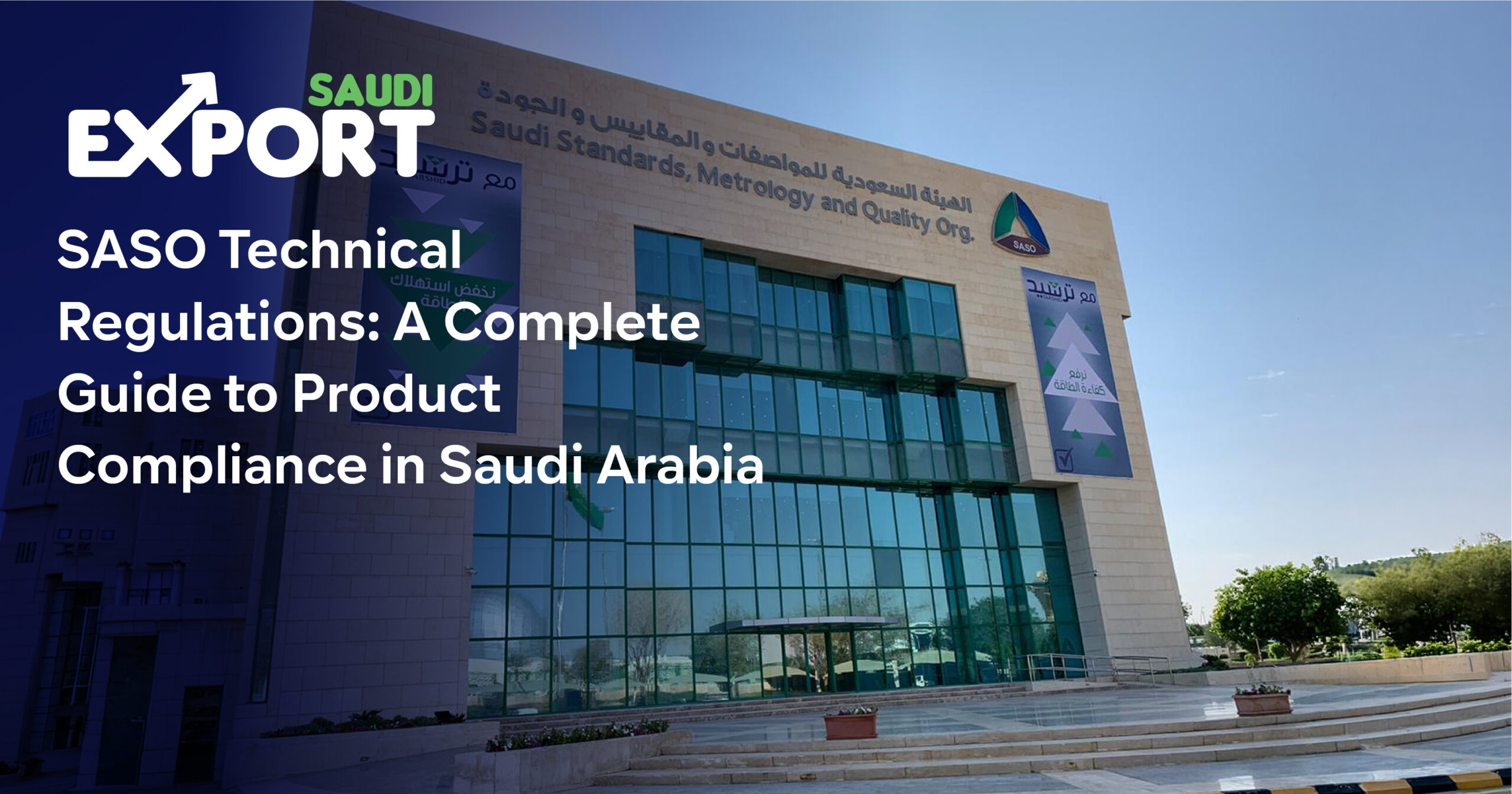
The Saudi Standards, Metrology and Quality Organization (SASO) is the governmental body responsible for ensuring the safety, quality, and performance of products entering the Kingdom. A SASO technical regulation serves as the mandatory framework that all manufacturers and importers must follow to legally place products on the Saudi market.
What Are SASO Technical Regulations?
SASO technical regulations are specific legal requirements that outline the essential safety, performance, and environmental standards for products entering Saudi Arabia. Part of the “SALEEM” product safety program, these regulations are designed to ensure that goods are “flawless” (a translation of Saleem), meaning they are safe for consumers, protect the environment, and meet high quality benchmarks. These regulations define exactly what a product must look like, how it must be labelled, and what technical criteria it must satisfy to be granted entry into the Kingdom.
Why Are SASO Technical Regulations Important?
Adhering to these regulations is not optional; it is a critical requirement for market access. Their importance stems from the following:
- Consumer Safety: They minimize electrical, mechanical, and chemical risks, ensuring products do not harm users.
- Market Access: Compliance is a mandatory prerequisite for customs clearance; non-compliant goods are rejected.
- Fair Trade: They prevent substandard goods from entering the market, creating a level playing field for all traders.
- Brand Reputation: Meeting these standards builds trust with Saudi consumers and local distributors.
- Legal Protection: Compliance shields businesses from fines, product recalls, and legal penalties associated with selling unsafe goods.
Learn more: Harmonized System Code (HS Code)
Products Covered by SASO Technical Regulations
While nearly all consumer and industrial goods are monitored, products are generally classified as “regulated” if they fall under specific technical mandates. Key categories include:
- Electrical and Electronic Appliances: Household appliances, lighting, and power tools.
- Automotive Sector: Vehicles, tires, and spare parts.
- Construction Materials: Cement, steel, insulation, and cladding.
- Chemical Products: Paints, detergents, and industrial chemicals.
- Consumer Goods: Textiles, toys, and household items.
- Utility Infrastructure: Pipes, valves, and sanitary ware.
Learn more: Product Classification Service
How to Comply with SASO Technical Regulations
Compliance is managed through the SABER system, an online portal that digitizes the certification process. Follow these steps:
- Register on SABER: The importer must register the company on the SABER portal.
- Product Classification: Identify the correct HS code for your product to determine which technical regulations apply.
- Submit Product Information: Upload technical documentation, such as test reports, photos, and technical specifications, to the platform.
- Select a Conformity Assessment Body (CAB): Choose a SASO-authorized body to review your documentation and conduct testing if required.
- Obtain Product Certificate of Conformity (PCoC): Once the CAB validates the compliance, the PCoC is issued, which is valid for one year.
- Request Shipment Certificate of Conformity (SCoC): Before each shipment, request an SCoC, which validates that the specific batch aligns with the previously issued PCoC.
- Customs Clearance: Use the SCoC to clear your goods through Saudi customs.
Learn more: Product Registration in SABER
Documents Required for SASO Technical Regulations Compliance
| Document Type | When It Is Required | Why It Is Required |
| Test Reports | During PCoC Application | To prove the product meets ISO 17025 standards. |
| Technical Data Sheet | During PCoC Application | To provide detailed specifications and verify product design. |
| Declaration of Conformity | During PCoC Application | Manufacturer’s legal statement of compliance. |
| Product Photos | During PCoC Application | Visual verification of labels, markings, and packaging. |
| Packing List | During SCoC Application | To detail shipment dimensions, weight, and contents. |
| Bill of Lading | During SCoC Application | Serves as official proof of the shipment. |
| Certificate of Origin | During SCoC Application | Verifies where the product was manufactured. |
Common Challenges in Meeting SASO Technical Regulations
- Regulatory Changes: Standards are frequently updated; failing to monitor these changes can lead to sudden non-compliance.
- Classification Errors: Incorrect HS code assignment can lead to applying the wrong technical regulation.
- Labelling Issues: Products must have clear, accurate, and often bilingual (Arabic/English) labels; non-compliant labels are a frequent cause of rejection.
- Documentation Gaps: Missing or incomplete test reports from accredited labs can halt the entire certification process.
- Complexity of SABER: Navigating the technical requirements of the online portal can be daunting for first-time exporters.
Read more: Export Cars to Saudi Arabia: A Complete Guide
The Role of SASO Technical Regulations in Product Import Approval
These regulations act as the “gatekeeper” for the Saudi economy. By integrating the SABER system with the customs clearing system (FASAH), Saudi Arabia ensures that no regulated product can enter the country without a valid SCoC. The process forces the responsibility of safety onto the manufacturer and importer before the goods reach the border. This proactive approach ensures that only vetted, safe, and quality-controlled products reach the consumer, significantly reducing the risk of unsafe goods being recalled from the shelves.
Read more: Import from China to Saudi Arabia: A Complete Guide to a Successful Import Process
Best Practices for Maintaining Compliance with SASO Technical Regulations
- Proactive Documentation: Maintain a comprehensive library of test reports and technical files well in advance of shipping.
- Regular Audits: Conduct internal reviews of your products and their labels against the latest SASO updates.
- Leverage Experts: Partner with specialized certification bodies or consultants who have deep knowledge of the SABER platform.
- Verify Lab Accreditation: Ensure all testing is performed by labs recognized by SASO (ISO/IEC 17025).
- Supply Chain Communication: Ensure your suppliers understand the strict documentation requirements early in the procurement phase.
To request a service or inquiries, contact the export to Saudi team
Frequently Asked Questions
Which products must comply with SASO Technical Regulations?
Almost all consumer and industrial goods, including electronics, building materials, textiles, toys, and automotive parts, must comply if they are “regulated.”
How long does the SASO Technical Regulations compliance process take?
It depends on product complexity and documentation readiness, but it typically takes a few weeks to obtain a PCoC, while SCoC issuance for shipments is much faster.
What happens if a product does not meet SASO Technical Regulations?
Shipments will be rejected at the port, leading to potential reshipment costs, storage fees, or, in the worst cases, the destruction of the goods at the owner’s expense.