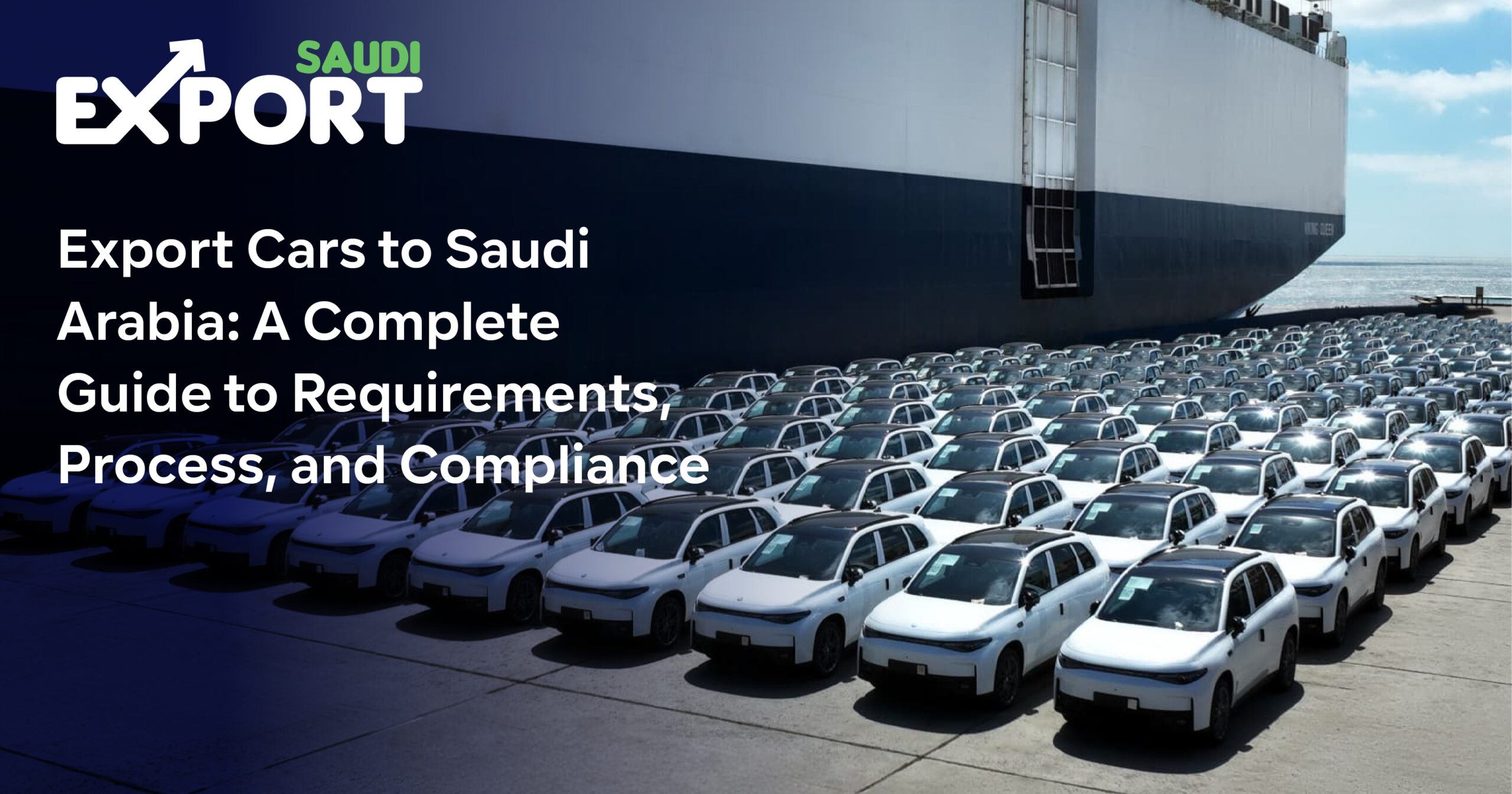
If you want to export cars to Saudi Arabia, navigating the strict import regulations is crucial for a seamless experience. This comprehensive guide details the essential requirements, official documentation, step-by-step procedures, and compliance standards necessary to successfully ship vehicles into the Kingdom while avoiding costly delays and penalties.
What Is Export Cars to Saudi Arabia?
Exporting cars to Saudi Arabia refers to the commercial or private process of shipping foreign-manufactured motor vehicles into the Kingdom of Saudi Arabia (KSA). This process is highly regulated by Saudi authorities, including the Zakat, Tax and Customs Authority (ZATCA) and the Saudi Standards, Metrology and Quality Organization (SASO). It encompasses everything from regional specification alignment to strict age verification and customs clearance.
Requirements for Export Cars to Saudi Arabia
To successfully cross the Saudi border, vehicles must adhere to specific baseline criteria:
- The 5-Year Rule: Passenger cars, SUVs, and light trucks must be no older than 5 model years. For imports landing in 2026, the vehicle must be a 2021 model or newer.
- Left-Hand Drive Only: Right-hand drive vehicles, or vehicles modified from right to left-hand drive, are completely prohibited.
- Title Restrictions: Salvage, rebuilt, or heavily damaged vehicles cannot be permanently imported.
Learn more: Harmonized System Code (HS Code)
Step-by-Step Process for Export Cars to Saudi Arabia
- Eligibility and VIN Verification: Check the vehicle’s manufacturing date and vehicle identification number (VIN) against Saudi standards.
- SASO Energy Efficiency Check: Verify and issue a fuel-economy conformity certificate via the SABER portal.
- Book Shipping: Arrange Roll-on/Roll-off (RoRo) or container shipping to prominent Saudi ports like Jeddah Islamic Port or King Abdulaziz Port in Dammam.
- Customs Declaration: File an official import declaration through ZATCA’s online portal.
- Pay Duties and Taxes: Settle the standard 5% customs duty and 15% Value Added Tax (VAT).
- Final Inspection and Registration: Pass local safety checks to obtain Saudi license plates.
Documents Required to Export Cars to Saudi Arabia
Having your paperwork perfectly organized is non-negotiable. You will need:
- Original Certificate of Origin (proving the country of manufacture).
- Certified original Bill of Sale or purchase invoice from the authorized agent.
- Bill of Lading from the ocean carrier.
- Original vehicle title and registration papers.
- SASO / SABER Certificate of Conformity.
- Valid Passport, National ID, or Iqama (residency permit) of the importer.
Learn more: Product Classification Service
Vehicle Compliance Standards for Export Cars to Saudi Arabia
Saudi Arabia enforces stringent environmental and safety criteria. All imported vehicles must possess a SASO Energy Efficiency Rating. Vehicles that fail to meet minimum fuel-economy parameters face heavy penalties starting from SAR 20,000 up to 50% of the car’s value. Furthermore, passenger cars must meet minimum emission requirements (typically Euro 4 or higher) and feature standard safety equipment, including anti-lock braking systems (ABS), functioning airbags, and seatbelts for all seating positions.
| Compliance Parameter | Requirement Standard |
| Fuel Economy / Energy Rating | SASO Verified (6-level efficiency scale) |
| Minimum Emission Class | Euro 4 or higher |
| Mandatory Safety Equipment | ABS, Airbags, Seatbelts on all seats |
Common Challenges When You Export Cars to Saudi Arabia
Importers frequently encounter bottlenecks due to a lack of preparation. The most common pitfall is falling outside the strict 5-year model rule, leading to immediate rejection at the port. Another major obstacle is the “double duty trap”—if you fail to produce a trusted, verified purchase invoice or original manufacturer documentation, ZATCA customs officials are authorized to double the assessed duty valuation of your car.
Learn more: Product Registration in SABER
How to Ensure a Smooth Export Cars to Saudi Arabia Process
To safeguard your investment, always cross-reference your vehicle’s specifications on the SABER portal before booking ocean freight. Ensure all foreign documentation is officially translated into Arabic and authenticated. Additionally, make sure to time the filing of your SASO efficiency certificate correctly, as these certificates are valid for exactly one year.
Why Choose a Professional Service for Export Cars to Saudi Arabia?
Navigating Middle Eastern customs laws requires up-to-date regional expertise. A professional vehicle relocation service or customs broker manages the complex SABER registration, secures optimal container or RoRo shipping rates, coordinates pre-shipment technical inspections, and streamlines the ZATCA clearance phase, saving you from expensive port storage fees and compliance penalties.
To request a service or inquiries, contact the export to Saudi team
FAQS
What types of vehicles can be exported to Saudi Arabia?
- New and used passenger cars, SUVs, and light trucks under 3.5 tons (maximum 5 years old).
- Heavy transport trucks and commercial vehicles over 3.5 tons (maximum 5 years old).
- Genuine classic and antique vehicles over 30 years old (exempt from the 5-year rule but subject to special road restrictions).
How long does the process to export cars to Saudi Arabia take?
- Ocean transit typically takes between 20 to 40 days depending on the origin port (e.g., USA or Europe to Jeddah/Dammam).
- SABER and SASO certification takes approximately 3 to 7 business days.
- Customs clearance at Saudi ports generally wraps up in 3 to 5 business days if all paperwork is flawless.
What are the most common reasons for delays when exporting cars to Saudi Arabia?
- Missing original or unauthenticated commercial purchase invoices and Certificates of Origin.
- Delays in generating the mandatory SABER Certificate of Conformity prior to the vessel’s arrival.
- Physical inspection failures caused by unapproved vehicle modifications, missing safety gear, or non-compliant window tints.